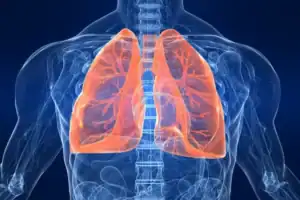
The Role of the Bronchogen Peptide Poland for Lung Tissue Research Researchers study the bronchogen peptide in laboratory models to

Researchers study Bronchogen as a peptide complex that influences inflammation at the cellular level in controlled models. Scientists focus on Bronchogen because it interacts with early stage inflammatory signaling instead of addressing downstream symptoms. This research approach frames inflammation as a regulated biological process rather than a single isolated trigger.
Researchers report that Bronchogen affects communication between immune cells and structural tissue cells, especially in respiratory focused inflammation models. By shaping how cells respond to stress signals, Bronchogen allows scientists to observe how inflammatory responses begin, intensify, and move toward balance. These mechanistic observations position Bronchogen as a useful research tool for studying inflammation without broadly suppressing immune activity.
Understanding Bronchogen’s overall role in inflammation becomes clearer by examining where it acts during the earliest phases of immune activation.
Explore Bronchogen from Direct Peptides, a peptide that helps regulate inflammation and maintain cellular balance for healthy immune communication.
Early stage inflammatory signaling begins when cells detect stress and release molecular signals that activate immune responses. Bronchogen influences this phase by interacting with signaling pathways that guide how immune cells communicate and respond. Instead of acting after inflammation escalates, Bronchogen aligns with processes that shape the initial cellular response, which helps researchers study inflammation at its source.
By affecting immune cell communication and cytokine signaling, Bronchogen helps regulate how inflammation develops inside tissue models. This interaction supports balanced signaling rather than excessive activation. Researchers examine this mechanism to better understand how peptides influence inflammation regulation without altering downstream immune functions.
Early signaling represents only one layer of inflammation, and cellular stress adds another important dimension to how inflammatory activity unfolds.
Cells experience stress when factors like oxidative pressure or internal imbalance disrupt normal function. This stress pushes cells to activate inflammatory pathways as a protective response. Bronchogen influences this stage by interacting with cellular systems that link stress detection to inflammatory activity, which helps researchers observe how inflammation begins before it spreads.
By guiding how cells respond to stress signals, Bronchogen helps limit excessive immune activation inside tissue models. This control supports steadier cytokine release and more organized cellular behavior during inflammatory conditions. Researchers focus on this role to better understand how peptides influence inflammation regulation at its earliest cellular level, where intervention has the greatest impact.
Because inflammation develops through more than one biological pathway, researchers also examine other peptides that act at different points within this process.
Beyond Bronchogen, researchers examine other peptides to understand how inflammation can be regulated at multiple biological levels. These peptides receive attention because inflammation does not rely on a single trigger or pathway. Instead, it develops through signaling activity, cellular stress, and tissue condition, which creates several points where regulation can occur.
KPV and BPC-157 represent two distinct approaches to inflammation modulation. KPV helps regulate the intensity of inflammatory pathway activation, which limits excessive signal amplification early in the response. BPC-157 supports tissue repair processes that reduce ongoing stress signals from damaged structures. Studying these peptides together helps researchers explore how inflammation responds to layered regulatory strategies rather than one isolated mechanism.
To make this comparison clearer, the table below highlights the research focus and insights for each peptide:
| Peptide | Research Focus / Pathway | Biological Insight Observed |
|---|---|---|
| Bronchogen | Early signaling and cellular stress response | Maintains balance in immune–tissue communication |
| KPV | Inflammatory pathway modulation (NF-κB related) | Controls excessive signal amplification early in inflammation |
| BPC-157 | Tissue repair and angiogenesis processes | Supports structural recovery to reduce persistent inflammation |
KPV helps regulate inflammatory pathways by reducing excessive signaling that drives inflammation. When cells trigger inflammation, they release signals that amplify immune activity. KPV acts early in this process by limiting signal strength, which helps prevent escalation. While Bronchogen focuses on restoring balanced cellular behavior, KPV targets the intensity of inflammatory signaling itself.
KPV also supports controlled immune communication during inflammatory stress. It allows cells to exchange signals without pushing the immune system into overdrive. This targeted control matters because sustained signaling often prolongs inflammation. By studying KPV alongside Bronchogen, researchers gain clearer insight into how different peptides influence inflammation through distinct but complementary mechanisms.
Inflammation often continues when tissue damage remains unresolved, making structural recovery another critical area of research attention.
Explore KPV from Direct Peptides, a peptide that helps control inflammatory signaling to limit excessive immune activation and maintain balance.
 BPC-157 influences tissue repair by supporting processes that help damaged tissue regain structure during inflammation. Research links BPC-157 with improved cell migration, faster wound closure and support for new blood vessel formation. These actions help stabilize injured areas, which reduces ongoing stress signals that often keep inflammatory activity active.
By supporting organized repair while inflammation is present, BPC-157 helps tissues recover without triggering additional immune strain. Unresolved tissue damage often prolongs inflammation, so repair plays a key role in limiting persistence. Researchers focus on this mechanism to understand how targeted tissue support can interrupt inflammation driven by structural damage rather than signaling imbalance.
Even when signaling becomes regulated, inflammation may continue if damaged tissue fails to return to a stable state.
Explore BPC-157 from Direct Peptides, a peptide that supports tissue repair and structural recovery to reduce persistent inflammation.
Inflammation persists when damaged tissue continues to release stress and danger signals. These signals keep immune cells active even after the initial trigger fades. As long as tissue structure remains disrupted, the body interprets the area as unstable, which sustains inflammatory activity instead of allowing resolution.
This persistence explains why inflammation can continue despite reduced signaling elsewhere. When repair does not restore normal tissue behavior, immune activation stays elevated. Research connected to peptides like Bronchogen highlights this link between tissue stability and inflammation control. Understanding this process helps explain why resolving structural damage plays a key role in shifting inflammation from persistence toward recovery.
As researchers connect these regulatory layers, attention increasingly turns toward how this growing knowledge may shape future inflammation research.
Ongoing research continues to deepen understanding of how Bronchogen fits within broader inflammation regulation as scientists actively examine how inflammatory processes progress and stabilize over time. This evolving perspective encourages researchers to view inflammation as an integrated process rather than a series of isolated events.
As studies increasingly evaluate Bronchogen alongside peptides such as KPV and BPC-157, researchers gain clearer insight into how multiple regulatory layers interact. At Direct Peptides, we support researchers worldwide by providing access to research peptides that enable continued exploration in this area.
[1] Kuzubova NA, Lebedeva ES, Dvorakovskaya IV, Surkova EA, Platonova IS, Titova ON. Modulating Effect of Peptide Therapy on the Morphofunctional State of Bronchial Epithelium in Rats with Obstructive Lung Pathology. Bull Exp Biol Med. 2015 Sep;159(5):685-8.
[2] Titova ON, Kuzubova NA, Lebedeva ES, Preobrazhenskaya TN, Surkova EA, Dvorakovskaya IV. [ANTIINFLAMMATORY AND REGENERATIVE EFFECT OF PEPTIDE THERAPY IN THE MODEL OF OBSTRUCTIVE LUNG PATHOLOGY]. Ross Fiziol Zh Im I M Sechenova. 2017 Feb;103(2):201-8. Russian.
[3] Dalmasso G, Charrier-Hisamuddin L, Nguyen HT, Yan Y, Sitaraman S, Merlin D. PepT1-mediated tripeptide KPV uptake reduces intestinal inflammation. Gastroenterology. 2008 Jan;134(1):166-78.
[4] McGuire FP, Martinez R, Lenz A, Skinner L, Cushman DM. Regeneration or Risk? A Narrative Review of BPC-157 for Musculoskeletal Healing. Curr Rev Musculoskelet Med. 2025 Dec;18(12):611-619.
What triggers Bronchogen activation in cells?
Bronchogen activates when cells encounter inflammatory or stress signals. In lung models, it helps epithelial and immune cells adjust their signaling and stress response. Its presence directs cells to maintain balance, reduce excessive immune activity, and restore normal tissue communication, without relying on a specific natural activation trigger.
How does Bronchogen interact with oxidative stress?
Bronchogen helps cells cope with oxidative stress by stabilizing epithelial structures and moderating immune signaling. It reduces excessive activation and supports organized responses during stress, allowing tissue to maintain function and communication. Bronchogen does not neutralize reactive oxygen species directly but controls downstream inflammatory effects.
Are there cell types that respond most to Bronchogen?
Respiratory epithelial cells and immune cells in the lung show the strongest response to Bronchogen. These cells adjust signaling, manage stress, and maintain tissue structure. Other cell types are less studied, but lung epithelial and immune cells consistently demonstrate measurable changes in communication and inflammation regulation when exposed to Bronchogen.
Does Bronchogen interact with T‑cell activation?
Bronchogen does not directly alter T-cell activation. It regulates signaling in epithelial and immune cells during inflammation, helping maintain balance and prevent excessive immune responses. Its activity supports controlled communication in tissue models without engaging adaptive immune cell pathways directly.
Can Bronchogen impact MAPK signaling?
Bronchogen does not directly modify MAPK pathways. It regulates immune communication and inflammatory responses in epithelial and immune cells, which indirectly influences processes connected to MAPK activity. This controlled signaling helps prevent excessive inflammation while supporting tissue stability in experimental models.

KPV Pre-Mixed Pen 2mg
Price range: £20.45 through £55.21 Select options This product has multiple variants. The options may be chosen on the product page
BPC-157 5mg Pre Mixed Pen
Price range: £20.91 through £56.46 Select options This product has multiple variants. The options may be chosen on the product page
BPC-157 KPV Nasal Stack
Price range: £41.13 through £73.26 Select options This product has multiple variants. The options may be chosen on the product page
BPC-157 Nasal Spray
Price range: £19.46 through £33.92 Select options This product has multiple variants. The options may be chosen on the product pageThe Role of the Bronchogen Peptide Poland for Lung Tissue Research Researchers study the bronchogen peptide in laboratory models to

The Role of AMPK Activators Poland in Boosting Cellular Energy AMPK, or AMP activated protein kinase, works as a central

Why Does PEG MGF Peptide Poland Last Longer Than Regular MGF? The PEG-MGF peptide lasts longer in research environments due

How Can Pegylated MGF Poland Reduce Cortisol? Cortisol, often called the “stress hormone,” plays a crucial role in metabolism, immune